
Operations and Management in Reinsurance Claims

In the grand reinsurance ecosystem, it’s fair to say that technical accounting is often viewed as a function whose primary purpose is simply to chase down brokers and cedants to get them to pay their premiums. However, shift your gaze to the claims side of the house, and the atmosphere changes entirely. Even though claims represent a significant financial outflow, people across the organisation are naturally far more focused on them. A claim is the most tangible part of the reinsurance lifecycle. Everyone understands it, everyone interacts with it, and everyone has a view on it. That being the case, it tends to have a lopsided relationship with the rest of the operation.
Thus, it is important to recognise that every downstream operational activity is part of a single, interconnected contract fulfilment. When people discuss digitisation, they tend to treat 'Claims' as a single, uniform block. So, we need to dismantle this first. This article aims to do just that by addressing the two completely different disciplines operating within it: Claims Operations and Claims Management.
Claims Operations
Let’s discuss operations first. Claims operations is pretty much the centre of transactional contract execution. It encompasses the entire intake and payout pipeline: logging first notices of loss, validating incoming broker bordereaux against active treaty terms, establishing initial baseline reserves, and executing financial settlements. When incoming loss details or policy attachment points are miskeyed at intake, the entire downstream line breaks, leading to settlement delays, misallocated reserves, reconciliation breaks, and audit red flags.
Digitising this side of the house requires building baseline process discipline right at the point of entry. By activating system-enforced quality gates, incoming claim notifications and financial advice are automatically cross-referenced against core contract terms before downstream processing can occur. This mechanism ensures downstream finance teams and technical specialists are blocked from working with unverified or corrupted claim data. Ultimately, by standardising incoming bordereaux and loss advice data flows, we shift the claims operations team away from manual data re-keying and elevate them into high-value data verification controllers.
Claims Management
Now, Claims Management is where expert human judgement comes into play. This is the domain of the claims handlers and managers, frequently highly qualified lawyers and technical specialists who focus on the likes of liability, legal merit, and strategic risk. These experts should never be bogged down by messy data or forced to hunt through administrative files. The ultimate goal of digitisation here is to present these specialists with a completely finished, polished task. One they can quickly review and hit approve to trigger the necessary booking or payment.
Doing it like this allows claims managers to be proactive again. Instead of looking at claims in isolation, managers can identify cross-cedant trends and systemic market exposures that might otherwise go unnoticed. For instance, if multiple firms report similar underlying liability issues within the same period, a connected system allows managers to spot the overarching trend immediately, rather than leaving the insights siloed across individual auditors.
How it all works together
Essentially, reinsurers must move past isolated files and follow a clear framework that maps the structural handover from the transactional engine of Claims Operations to the strategic oversight of Claims Management. I like to view it like this:
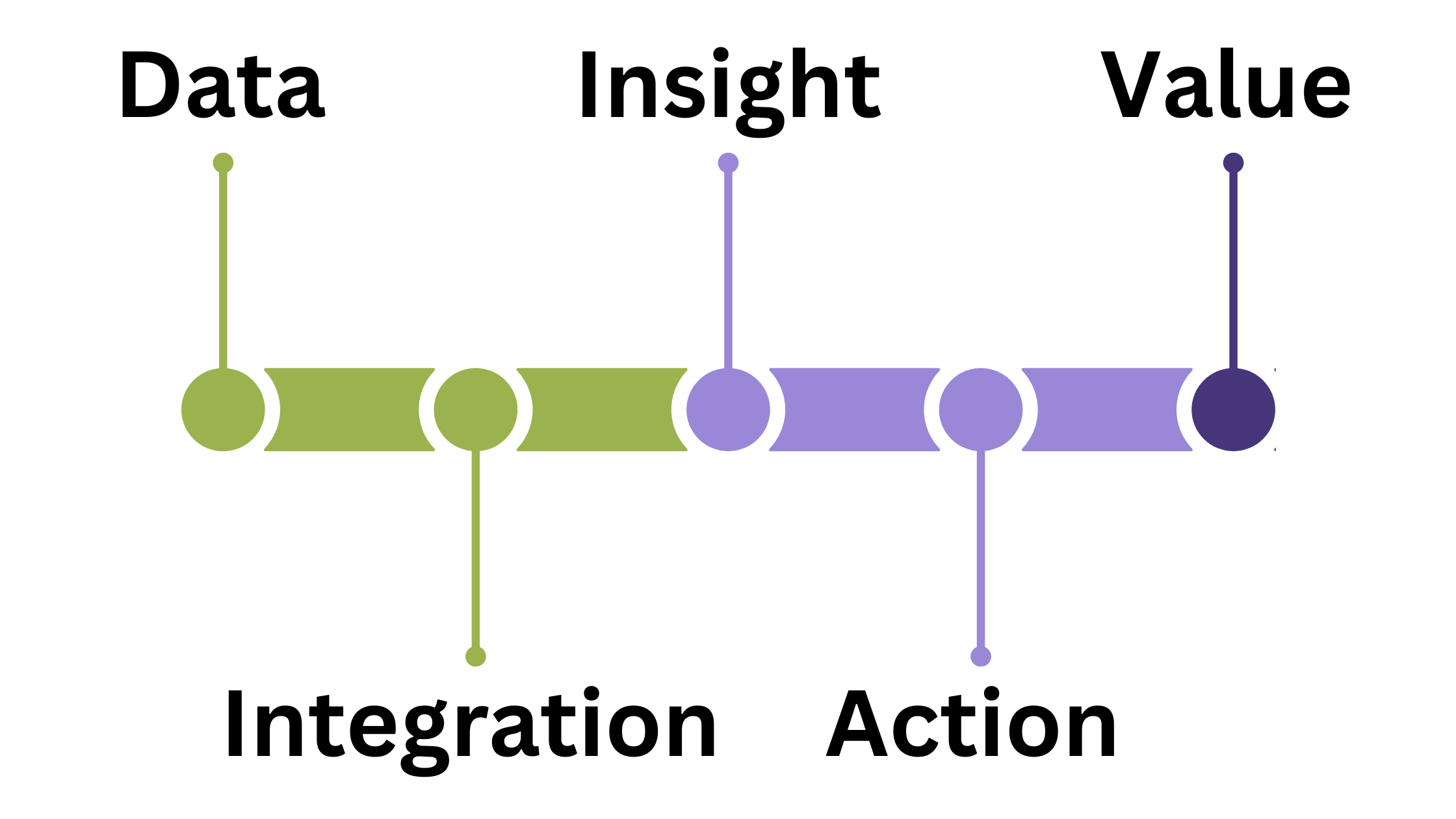
Data and integration
The journey begins with Data and Integration, which is the natural domain of Claims Operations. Reinsurance claims generate an incredible volume of rich, qualitative data. This data is often tucked away inside internal and external audit reports generated by third-party legal partners. Historically, these documents have been received as flat, unsearchable PDFs, which severely limits ease of analysis.
Operations steps in to standardise this raw input, ensuring vendors deliver reports in machine-readable formats. They then integrate these narratives with quantitative transaction systems using unique linking keys. Without Operations executing these two initial stages flawlessly, the data remains siloed, and the broader reinsurance engine risks running on false inputs.
Insight, action and value
Once Operations has built a connected pipeline, Claims Management takes the reins to drive insight, action, and value. With an already re-populated task, claims managers and legal experts can finally lift their heads above individual files! Hallelujah. They use this integrated data to gain insight. For instance, by connecting individual audit observations across a massive market event, they can trace liability relationships across an entire risk tower.
This collective intelligence triggers proactive action. Managers can alert underwriting teams to emerging portfolio risks, identify shifting legal environments, or flag potential reserve impacts long before incomplete or lagging broker reports catch up. The ultimate destination of this journey is value.
Ultimately, by drawing a sharp line between transactional Operations and strategic Management, we are in a better position to view the dynamic correctly, allowing us to see where digitisation supports firms best.
If you found this helpful, have a look at my other resources or feel free to get in touch with any questions.