
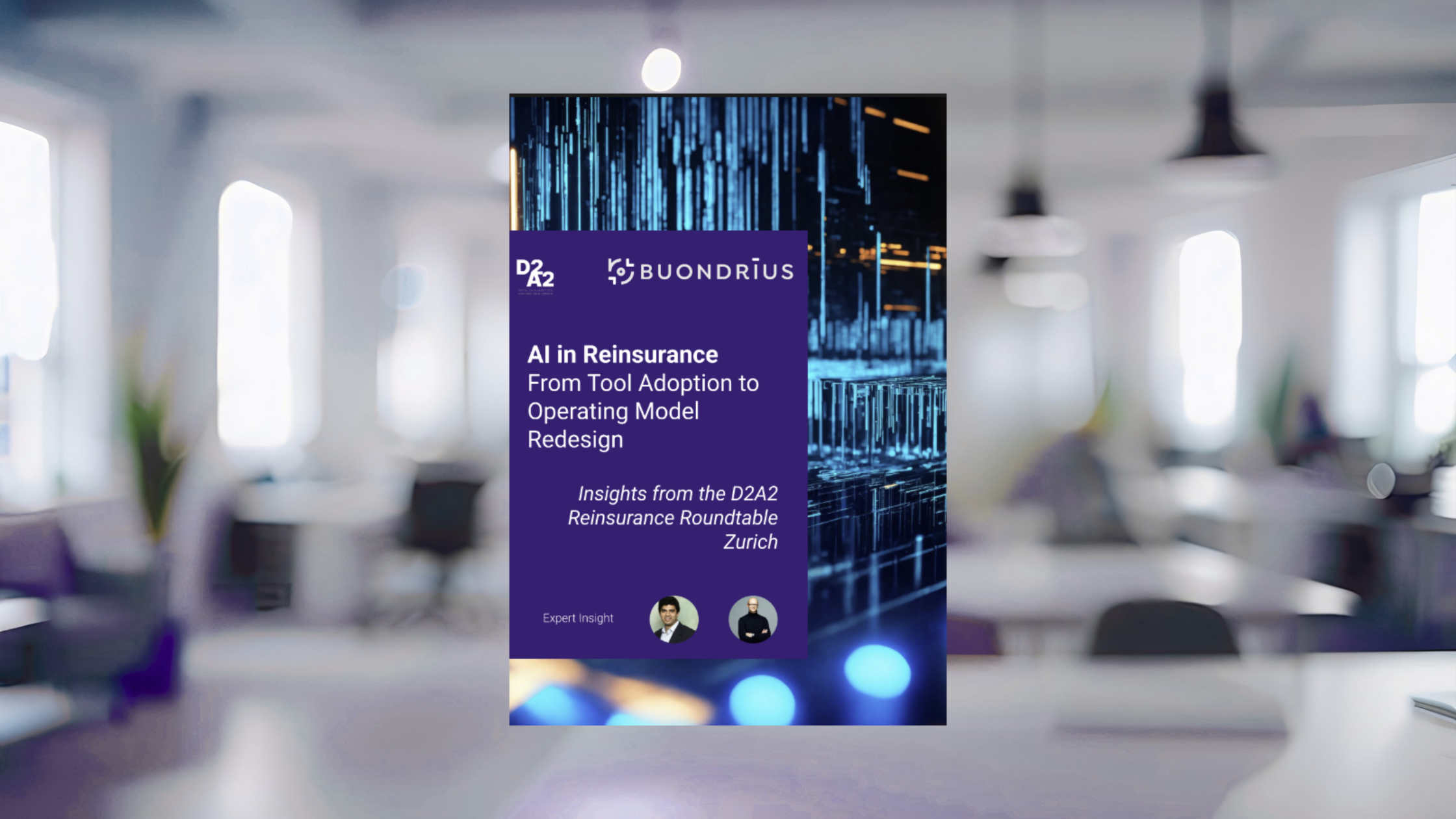
Strategy papers have a habit of being nodded at in the meeting and then promptly forgotten about by Wednesday. I'd hate that to happen to the AI in Reinsurance report that came out of the Zurich discussion I partnered on with D2A2. So instead of summarising it here, I'd like to do something more useful: say what I would actually do with it on Monday morning.
I should say where I'm coming from. Most of my career has been spent close to treaty administration, claims and technical accounting, which is a long way from the boardroom. Thus, this is a desk-level reading, and you may well disagree with parts of it. Good! I'd like to hear where.
Between Report And Desk
The report's central question is whether reinsurers will use AI to do today's work a little faster, or to rethink how the work gets done in the first place. It's a good question. It's also a very big one. Big questions have a way of freezing a team that already has a bordereaux backlog waiting on Monday. Realistically, nobody redesigns an operating model in a week, and nobody should try. So here is my practical translation. Three things I would do. Not three projects, three habits.
1. Start With The Exceptions, Not The Happy Path
Most process maps show the happy path: the message arrives, the data is clean, the booking posts, and everyone goes home on time. Real operations rarely look like that. They run on exceptions - the unusual wording, the missing field, the cedent who does things their own way. If you want to redesign work, you first have to see the real work. So I would ask the team to log every exception for a month: what it was, who caught it, and how they fixed it. No judgement, just a list.
I'd expect the list to be shorter and more repetitive than anyone assumes. And that's exactly where the redesign should begin, because a pattern you can see is a pattern you can change.
2. Ask Experienced People What They Would Stop Doing
The most valuable knowledge in a reinsurance operation rarely sits in a system. It sits with a handful of people who know why a particular treaty is handled the way it is, and what happens if it isn't. Before anything gets automated, I would ask them two questions:
What do you wish you never had to touch again?
What would you never hand over?
The first shows where AI can help soonest. The second is just as useful, because it tells you where judgement has to stay, and it stops anyone building something their best people won't trust. There's another benefit too. Asking people to describe how they decide, and not only what they produce, is a good way to capture know-how before it leaves with the person who holds it.
3. Pick One Narrow Flow And Let It Prove Itself
Redesigning an entire operating model sounds exciting right up until someone asks where to begin. I wouldn't begin with everything at once. I would choose one narrow, repeatable flow with real volume - one type of claims notification, say, or one broker's bordereaux - and try the new way of working there first. Keep it small enough to measure and visible enough that colleagues can see what changed. In my experience, the sceptics on Monday often become the best advocates by week three, provided they helped design it. That, I'd argue, is worth more than any pilot report.
Notice that nothing above needs a new platform, a budget line or a vendor. That's deliberate. The work of redesigning starts well before the technology arrives, and, indeed, it's what makes the technology worth buying. The report points to where reinsurance operations might be heading. Monday morning is about the next step, and the devil, as ever, is in the detail. I'd rather take one well-chosen step with the right people than announce a grand plan nobody believes in.
If you'd like to read the full report, you can find it here: https://www.buondrius.com/ai-in-reinsurance-from-tool-adoption-to-operating-model-redesign
And if you'd like to compare notes on where your own Monday morning might begin, send me a message. ✉️